

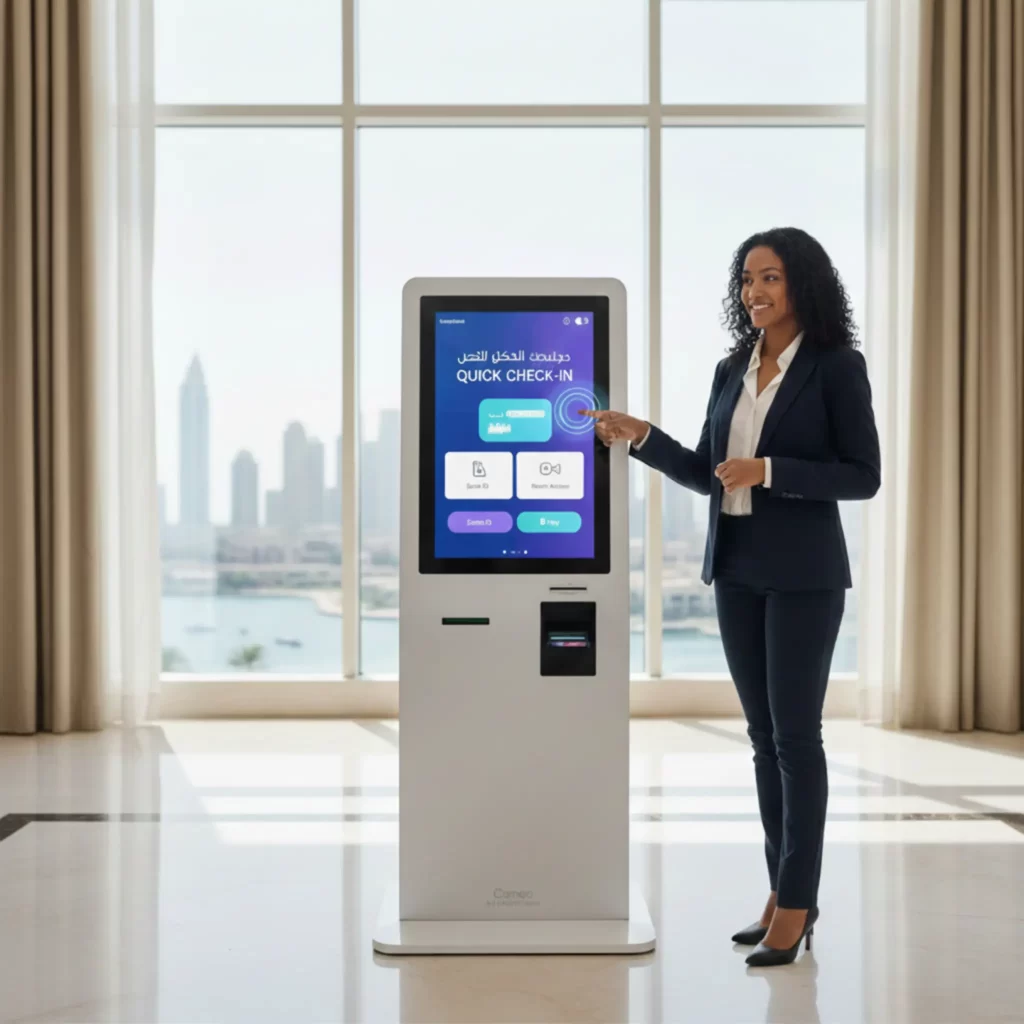
Dubai is rapidly becoming a fully self-service, digital-first city. From shopping malls and airports to hotels, banks, and government offices, touchscreen kiosks are now a familiar part of everyday interactions. Businesses are adopting kiosks not as a novelty, but as a practical way to reduce queues, improve service speed, capture data, and create consistent brand experiences.
This shift has led to growing demand for reliable touch screen kiosk manufacturers in Dubai, companies that understand local operating conditions, user behaviour, and integration requirements. This guide explains what actually matters when choosing a kiosk, what businesses can realistically expect to invest, and which industries see the strongest returns.
What Makes Touch Screen Kiosks Work in Dubai
Dubai’s environment is demanding. High footfall, long operating hours, and extreme heat mean kiosks must be engineered for durability as much as design. A kiosk that works well in a controlled indoor setting may fail quickly if deployed outdoors or in semi-open public spaces.
Effective kiosks combine responsive touch technology with industrial-grade hardware, reliable software integration, and protection against wear and misuse. Displays must remain clear under bright lighting, enclosures need proper ventilation, and internal components must handle continuous usage without performance drops.
Just as importantly, kiosks should integrate smoothly with existing business systems such as POS platforms, CRM tools, ticketing software, or queue management solutions. To summarise the core features businesses in Dubai prioritise:
- High-definition capacitive or infrared touch displays for smooth, smartphone-like interaction
- High-brightness screens for visibility in strong ambient or outdoor light
- Industrial-grade components for malls, airports, and transport hubs
- Payment compatibility, including cards, NFC, and QR-based wallets
- Optional add-ons such as cameras, scanners, printers, and feedback modules
- Anti-vandal, anti-scratch glass for public-facing installations
- Custom branding that aligns with corporate identity
When these elements come together, kiosks deliver both usability and long-term reliability.
Understanding Touch Screen Kiosk Costs in Dubai
Kiosk pricing in Dubai varies widely depending on screen size, enclosure type, software requirements, and optional hardware. A basic indoor unit costs significantly less than a fully outdoor, payment-enabled kiosk designed for continuous use in heat and dust.
For most businesses, indoor kiosks fall into a moderate investment range, while outdoor or highly customised units command a higher price due to cooling systems, sunlight-readable screens, and reinforced metal fabrication. Software licensing, system integration, and maintenance contracts are additional considerations, particularly for enterprise or multi-location deployments.
When sourced from experienced touch screen kiosk manufacturers in Dubai, these systems are typically built to operate reliably for five to seven years, making them a long-term infrastructure investment rather than a short-term expense.
Industries Seeing the Highest Value from Kiosks
Dubai’s service-driven economy makes kiosks relevant across sectors, but some industries benefit more immediately than others.
- Retail and shopping malls utilize kiosks to enhance customer engagement through product browsing, wayfinding, loyalty registration, and feedback collection, thereby reducing staff workload while improving interaction.
- In hospitality and tourism, kiosks streamline hotel check-ins, ticketing, and concierge services, helping operators manage high visitor volumes efficiently.
- Restaurants and cafés rely on self-ordering kiosks to reduce queues, improve order accuracy, and increase average order value.
- Government and public services use smart kiosks to support bill payments, appointment check-ins, document services, and digital inquiries, aligning with Dubai’s push toward paperless operations.
- Banks deploy kiosks to improve branch efficiency through smart queuing, KYC processes, and self-service transactions, while healthcare facilities use them for patient check-in, insurance verification, and appointment management.
- Real estate developers also benefit by using kiosks for virtual tours, digital brochures, and lead capture at sales centres and exhibitions.
Why Dubai Businesses Choose Custom-Built Kiosks
Off-the-shelf kiosks may work temporarily, but they rarely hold up under UAE conditions. Custom-built kiosks are preferred because they are designed specifically for local climate, usage patterns, and system integrations.
Custom manufacturing allows for better heat management, stronger enclosures, tailored branding, and compatibility with UAE-specific platforms and payment systems. Just as importantly, working with local touch screen kiosk manufacturers in Dubai ensures faster support, easier upgrades, and access to on-ground technical teams when needed.
Smart, Interactive, and Built for the Future
Touchscreen kiosks are no longer optional add-ons. In Dubai, they are becoming essential business tools, automating services, improving customer experience, and supporting scalable growth across industries.
From indoor self-service kiosks to fully outdoor interactive units, Cameo Advertising designs and manufactures customised kiosk solutions built for Dubai’s environment, operational demands, and brand goals. With the city moving rapidly toward automation and smart services, investing in the right kiosk infrastructure today ensures your business stays relevant tomorrow.
Dubai is evolving fast. Your customer experience should evolve with it.