

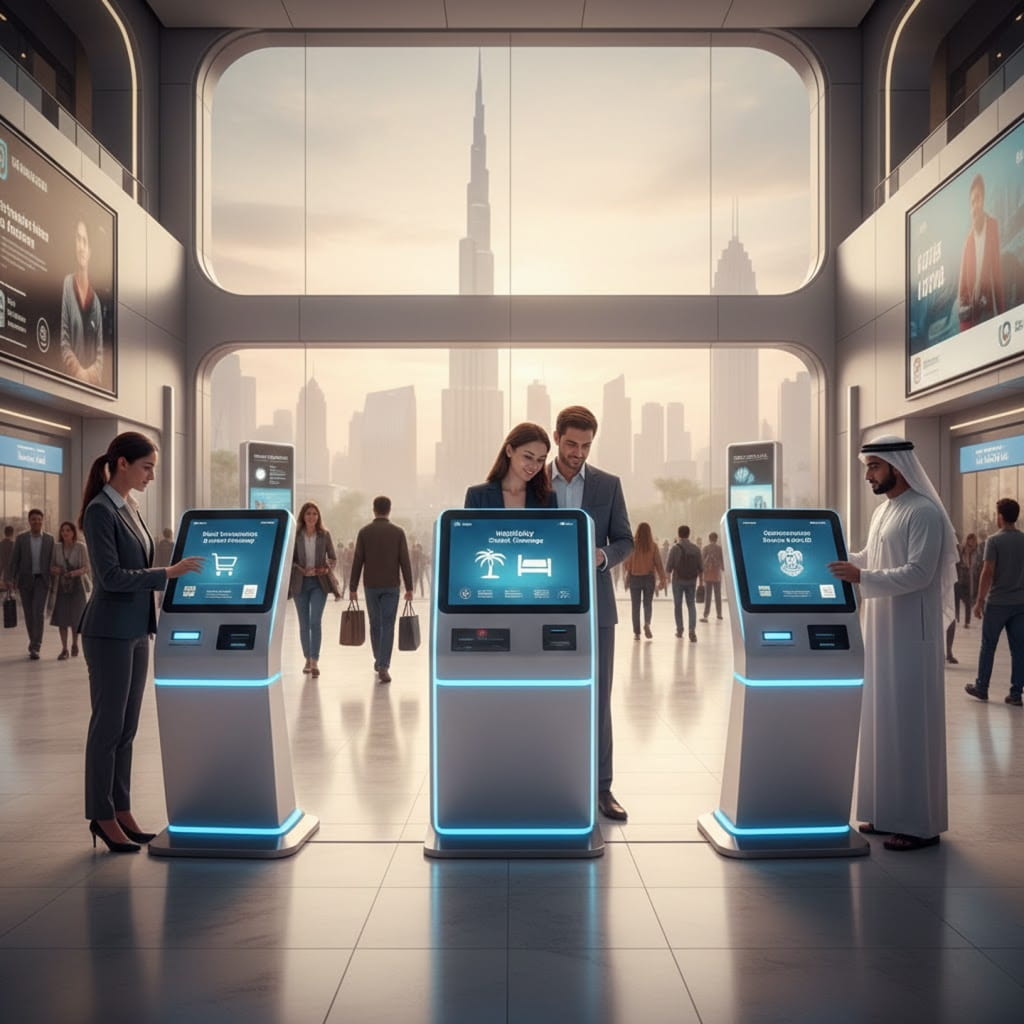
Dubai’s growth story is rooted in speed, service, and seamless customer experiences. From shopping malls to airports, hotels, and public offices, digital and interactive kiosks have become a common sight, and for good reason. They blend convenience, technology, and branding into one compact interface.
As Dubai pushes ahead with its Smart City vision, kiosks are no longer just information points — they’re digital touchpoints for everything from payments to check-ins to customer engagement. The demand has grown sharply, driving innovation among kiosk suppliers in Dubai who now cater to retail, hospitality, and government sectors with custom-built, high-performance systems.
Kiosks in Retail: Convenience Meets Conversion
In Dubai’s competitive retail environment, where experience drives sales, kiosks have become strategic tools. Self-service kiosks streamline queues, enable quick payments, and allow customers to browse digital catalogs or loyalty programs.
For malls and standalone stores alike, these kiosks serve dual purposes, speeding up transactions and reinforcing brand identity. Interactive product finders, digital receipts, and mobile wallet integration all contribute to faster, smoother retail interactions.
Some of the city’s largest retail chains now use kiosks to manage omnichannel orders, allowing shoppers to buy online and pick up in-store. For retailers, this reduces pressure on sales counters while keeping operations data-driven and efficient.
Kiosks in Hospitality: Enhancing Guest Experience
Dubai’s hotel and hospitality sector thrives on first impressions, and kiosks are redefining how guests check in, order, or navigate their stay. Self-check-in terminals in lobbies eliminate long queues, especially during peak tourist seasons. Touch-screen kiosks also allow guests to explore amenities, book spa sessions, or access concierge services instantly.
For food and beverage operations, digital ordering kiosks have become invaluable. They allow customers to browse menus, customize orders, and pay seamlessly, improving order accuracy while freeing staff for higher-value service roles.
The best kiosk suppliers in Dubai integrate multilingual support, sleek design, and brand customization, ensuring every kiosk fits the visual tone of luxury hotels, beach resorts, and fine-dining outlets.
Kiosks in Government and Public Services
Dubai’s government has long been a pioneer in digitized public services, and kiosks play a central role in that transformation. Smart kiosks across metro stations, malls, and community centers allow residents and visitors to pay bills, renew licenses, and access essential e-services without visiting a counter.
RTA ticketing kiosks, Dubai Municipality service stations, and DEWA payment terminals are all examples of how kiosks have reduced waiting times while improving accessibility. These systems often operate 24/7 — a critical feature in a city that never slows down.
Modern kiosks also integrate biometric scanners, NFC technology, and cloud-based reporting, making them secure, scalable, and easy to manage for government agencies.
Design, Durability & Deployment
While the software drives functionality, the physical design defines longevity, especially in Dubai’s climate. Heat, dust, and high footfall demand kiosks built with industrial-grade components and smart ventilation.
Leading kiosk suppliers in Dubai now use powder-coated metal bodies, anti-glare screens, and modular enclosures to ensure performance even in semi-outdoor conditions like mall atriums or transport terminals. Cable management, easy service access, and remote monitoring options have also become standard across advanced systems.
Moreover, design flexibility allows kiosks to blend into their environments, from minimalist glass finishes for retail stores to robust metallic frames for industrial or government use.
Why Kiosks Are the Future of Smart City Integration
The growing adoption of kiosks ties directly into Dubai’s Smart City roadmap. As AI and IoT technologies become mainstream, kiosks are evolving from static terminals to intelligent assistants.
Modern systems can now detect user preferences, offer personalized services, and connect directly to cloud databases for real-time analytics. For brands and government entities, that means actionable insights — what customers are viewing, when they interact most, and which services see the highest demand.
This data-driven edge is why kiosks in Dubai are no longer optional add-ons but integral parts of operational strategy, bridging the gap between human service and digital efficiency.
Conclusion: Interactive Design for a Connected City
From malls to ministries, kiosks are transforming how Dubai interacts, one screen at a time. They enhance customer convenience, streamline service delivery, and extend brand presence into high-traffic environments.
Choosing the right partner is critical. Experienced kiosk suppliers in Dubai don’t just deliver hardware; they provide end-to-end support, from interface design and software integration to after-sales maintenance. In a city where efficiency defines experience, a well-designed kiosk isn’t just a tool — it’s a business advantage.
FAQs
- What industries benefit most from kiosks in Dubai?
Retail, hospitality, healthcare, and government sectors use kiosks extensively for payments, information display, and service automation.
- Can kiosks be customized to match brand identity?
Yes, kiosk suppliers offer full customization, including color schemes, branding, logos, and screen interfaces to align with each client’s brand.
- How do kiosks handle Dubai’s heat and dust?
Modern kiosks use ventilated metal housings, anti-glare displays, and IP-rated components to withstand harsh environmental conditions.
- Are payment kiosks secure for customer data?
Absolutely. They integrate encrypted payment gateways, biometric authentication, and cloud-based monitoring to ensure security and compliance.
- What’s the typical lifespan of a kiosk in Dubai’s commercial settings?
With proper maintenance, kiosks can operate efficiently for 5-7 years, depending on usage intensity and environmental exposure.